
Great service, one shift at a time.
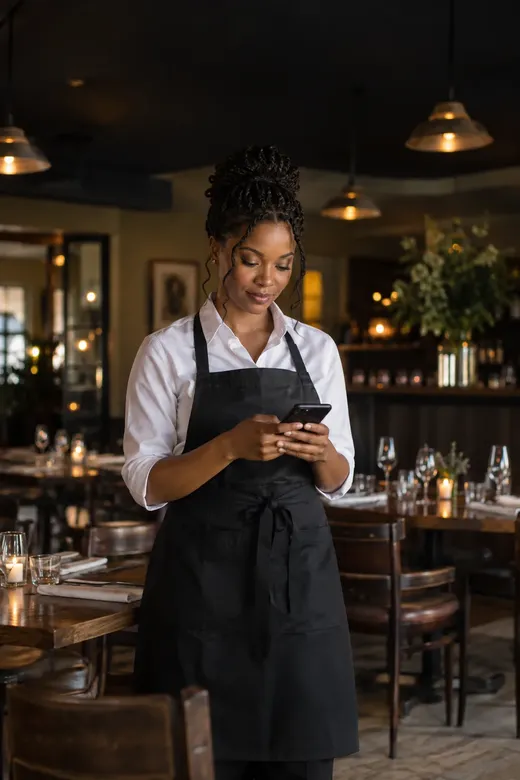
Five-minute lessons for servers, hosts, bartenders, baristas, kitchen crews and shift managers. One table, bar, kitchen or shift situation per lesson, with the exact words and steps to use, on a phone between shifts.
- 5
- lessons
- 1
- tracks
- 1
- areas of restaurant work
- 5
- minutes each
Most restaurant training happens mid-shift, in a hurry, and differently on every rota.
A new hire follows whoever is on, copies their habits, good and bad, and learns the rest from guests' faces and the chef's temper. The standard lives in a laminated sheet nobody reads, and the same mistakes come back with every new starter.
-
Too long to schedule
A classroom session means taking people off the floor on a day they are needed, so it happens once, at induction, if at all.
-
Too general to use
Advice about "great hospitality" does not tell anyone what to say to the guest whose starter is late or who asks about nuts.
-
Too rare to stick
A habit shown once is a memory, and a faint one. Greeting, allergens and hand hygiene need repeating until they become reflexes.
One situation, five minutes, the words to use.
Every lesson takes one real moment on a shift and shows what good looks like, what usually goes wrong and how to recover. A presenter talks it through; the learner reads, listens and answers.
-
One shift situation per lesson
A guest with an allergy, a wrong order at the pass, a queue at the host stand. The lesson shows the standard, the common mistake and the recovery, with the exact phrases.
-
Plain English, for everyone
Written for teams where English is often a second language. Short sentences, no jargon, and every kitchen or floor term explained in one line the first time it appears.
-
Checked, not assumed
Each lesson ends with a few questions about what you would actually do, so the habit is tested before the next guest tests it for real.
Built for the whole house, front and back.
Tracks are organised by area and by role, so a line cook, a bartender, a host and a shift manager each get the lessons that match their day.
-
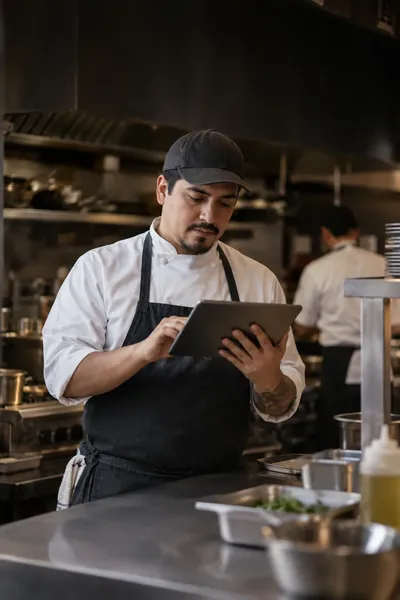
Kitchen line
Mise en place, tickets, temperatures, knife safety, cross-contamination and the dish pit.
-
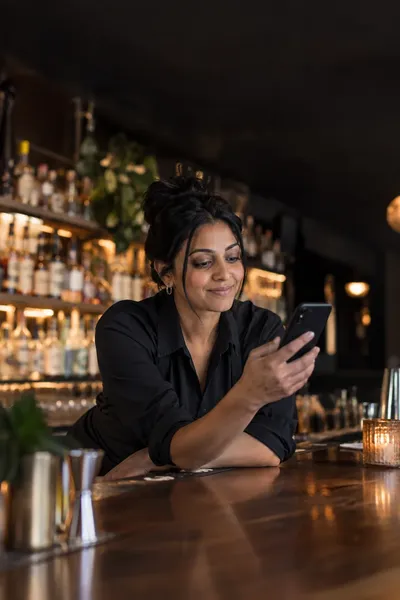
Bar and coffee
Setup, pours, classic cocktails, wine service, espresso and responsible alcohol service.
-

Host stand and floor
Greeting, seating, waitlists, reading the table, taking orders and running food.
-
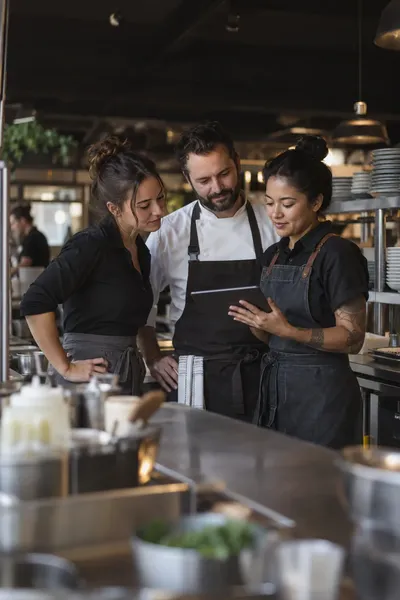
The whole team
Pre-shift, the rush, front and back of house working together, complaints and the close.
Ten areas of restaurant work, opened track by track.
Every area starts with practical foundations and goes deeper by role. Free tracks let anyone begin; Premium opens the rest for a person or a whole restaurant.
-
Welcoming and Serving Guests
1 tracks, 5 lessons- The First Thirty Seconds: Greeting Every GuestFree to start
New tracks are added to the library over time. What you see here is what learners can open in the app today.
Start free. Pay for the rest by the month, the year or the seat.
Free tracks cost nothing. Past them there is one flat price for a person and one price per seat for a restaurant or a team, in US dollars.
- Free
- Free tracks across several areas: greeting guests, allergens, the bar, complaints and the rush.
- $29.99 a year
- Every area and every track, for one person, billed once a year.
- $24.00 per seat, a year
- Per seat for a restaurant, a cafe or a group, with an invite link, a web dashboard and invoices.
Before you ask
How long does a lesson take?
Is it only for people who speak English well?
Does it work on a phone?
Can we give each role only the lessons that apply to them?
Does it replace a food safety certificate?
How do we know whether staff actually did the training?
What does it cost?
Tell us about your restaurant.
Say roughly how many staff you have and which areas you want to start with. We answer every message ourselves.
Get in touchStraight to a person, not a sales sequence.